



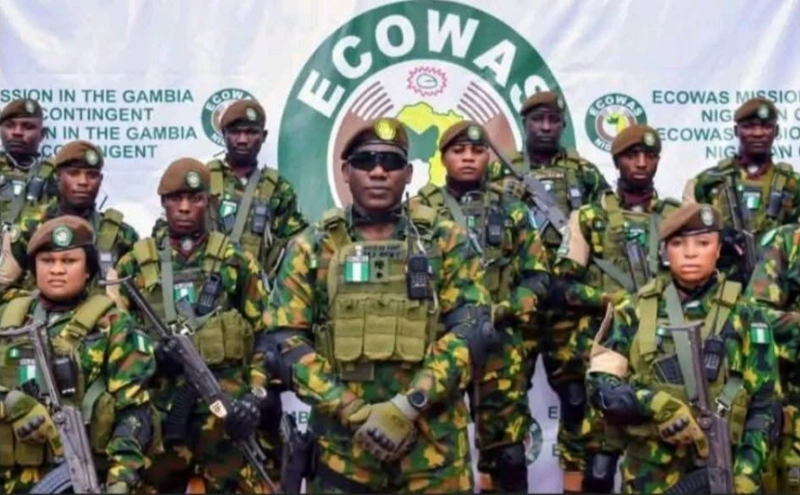
FREETOWN, SIERRA LEONE – West African leaders have moved from declarations to concrete steps in an effort to contain the growing threat of jihadist violence spreading towards the region’s coastal states. As of 4 March 2026, the activation of the ECOWAS regional standby force has been confirmed, with plans to deploy a counter-terrorism unit designed to neutralise militant groups operating across the Sahel and neighbouring areas.
The move marks a pivotal moment for regional security cooperation. It comes at a time when the security architecture in the Sahel has become increasingly fragmented following political upheavals and shifting alliances.
“The operationalisation of this force is a clear signal that West Africa will no longer wait for external solutions. By funding and manning this unit internally, ECOWAS is taking ownership of a conflict that has reached an existential threshold for our coastal nations.”
Standby Force Plans Finalised in Freetown
The operational details of the mission were finalised during a meeting of ECOWAS defence chiefs in Freetown, Sierra Leone, which concluded on 1 March 2026. Military planners agreed to establish a specialised counter-terrorism unit under the ECOWAS regional standby force framework. According to officials involved in the discussions, the initial deployment target is 2,000 troops, expected to be fully mobilised by the end of 2026.
The force is intended to be highly mobile, allowing it to respond quickly to cross-border militant activity that increasingly threatens countries along the Gulf of Guinea. Nations such as Benin, Togo, and Ghana have experienced a rise in incursions linked to jihadist groups operating further north.
Regional leaders say the new framework also emphasises financial independence. Rather than relying heavily on foreign military funding, ECOWAS member states intend to provide the bulk of the resources required for the mission. Nigeria has offered to support the mission’s intelligence operations via the National Counter Terrorism Centre (NCTC) in Abuja, which will serve as the primary coordination hub for intelligence sharing.
Political Rift Complicates Regional Coordination
The creation of the standby force takes place against a major political divide within West Africa. In 2025, Mali, Burkina Faso, and Niger formally withdrew from ECOWAS to form the Alliance of Sahel States (AES). Their departure has complicated efforts to coordinate counter-terrorism operations, as the most active militant networks remain concentrated inside territories now governed by the AES alliance.
Groups linked to Jama’at Nasr al-Islam wal Muslimin (JNIM) and Islamic State affiliates continue to operate along borders that remain highly porous. During the Freetown meeting, military chiefs acknowledged that cooperation between ECOWAS and AES members would still be essential despite political tensions. According to the African Union’s Peace and Security Council latest reports, fragmented security architectures only embolden insurgent movements.
Growing Security Pressure and the Use of Drones
The urgency behind the new initiative reflects the deteriorating security situation. Regional monitoring groups estimate that nearly 13,000 conflict-related deaths occurred in the first half of 2025 alone.
Militant groups have also broadened their reach, striking strategic urban locations. Earlier this year, a major assault linked to Islamic State fighters targeted the international airport in Niamey. In addition to direct attacks, armed groups have increasingly targeted economic infrastructure, imposing informal taxes on fuel convoys and commercial transport routes connecting coastal ports to the Sahel.
Security officials have also raised concerns about the growing use of inexpensive armed drones by militant networks. These devices have proven capable of inflicting significant damage on military patrols, forcing the new standby force to prioritise anti-drone technology as part of its operational kit.
A Test for West African Security Cooperation
The activation of the ECOWAS regional standby force represents a renewed attempt by West African states to coordinate their response to a conflict that has expanded beyond the Sahel’s core battle zones. Whether the initiative succeeds may depend largely on whether ECOWAS and the AES can bridge their political differences to form a unified front. For now, regional leaders appear determined to prove they can organise a collective response to the most serious security challenge the region has faced in decades.

