



On a humid December afternoon in Safi, the rain did not fall – it crashed down. Within three hours, streets turned into torrents. Cars were swept aside like debris. Families climbed to rooftops. By nightfall, dozens were dead. Two months later, in February, dams in northern Morocco were operating beyond safe capacity, and more than 150,000 people were being evacuated.
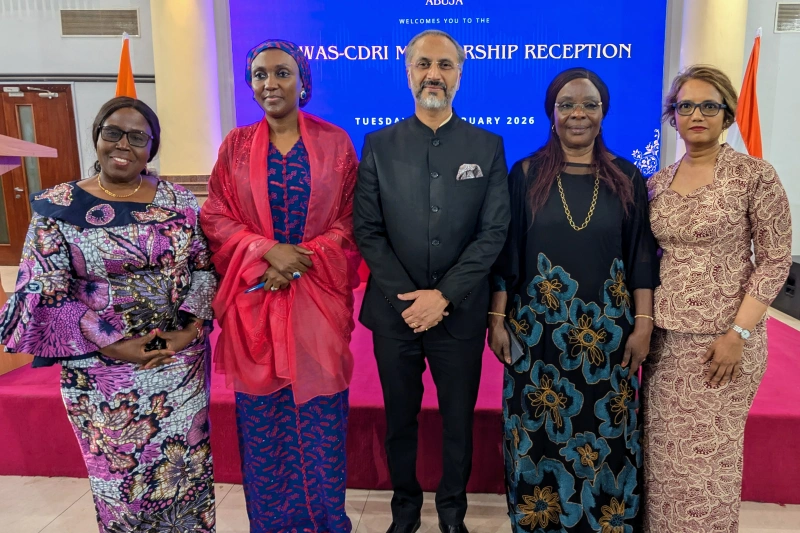
Across the Sahel, the story has been painfully familiar. It is against this backdrop that the official ECOWAS CDRI Membership 2026 was confirmed on 17 February. This strategic move joins the Economic Community of West African States with the Coalition for Disaster Resilient Infrastructure – a global partnership founded by India to ensure that roads, bridges, power lines, and hospitals are built to survive the climate shocks of the future.
For West Africa, the ECOWAS CDRI Membership 2026 is less about diplomacy and more about basic survival.
When Climate Shocks Become Economic Shocks
In 2025 alone, floods affected an estimated 7.5 million people across West and Central Africa. In Nigeria, more than 1.3 million people were displaced. In Chad and Niger, entire farming communities saw their fields swallowed by water just weeks before harvest.
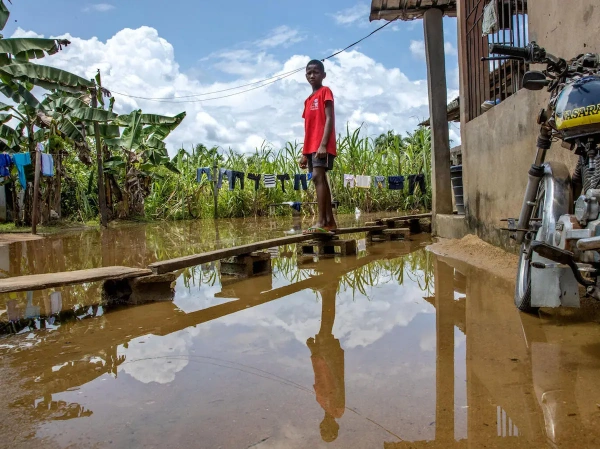
But the deeper damage was not only measured in lives lost or homes destroyed. When highways collapse, trade stops. When substations flood, hospitals go dark. When bridges wash away, food prices rise hundreds of miles away. Segments of the Abidjan–Lagos trade corridor were disrupted this past year, proving that climate events are no longer seasonal emergencies – they are structural economic threats.
From Reaction to Prevention
For decades, disaster policy in the region has focused on response: relief materials, emergency funds, and reconstruction appeals. The ECOWAS CDRI Membership 2026 signals a major pivot toward prevention.
Facilitated by the United Nations Development Programme (UNDP) through a Sweden-backed Sahel resilience initiative, the partnership gives the region access to technical standards that many developing countries often struggle to finance independently. The shift sounds technical, but in practice, it is deeply practical. It means:
-
Designing transmission towers that can withstand stronger wind loads.
-
Elevating hospital cold-chain storage above projected flood lines.
-
Reinforcing highways using materials suited for higher temperature ranges.
-
Modelling 50-year flood projections before a single foundation is poured.
Power, Health, and the Cost of Getting It Wrong
West Africa is currently expanding electricity integration through the West African Power Pool (WAPP). Interconnection projects linking Nigeria, Niger, Benin, and Burkina Faso are designed to stabilise supply across borders. However, a regional grid is only as strong as its weakest tower.
Under the framework of the ECOWAS CDRI Membership 2026, engineering guidance is expected to support climate-resilient transmission design, reducing the risk of cascading blackouts during extreme weather. Health systems are equally vulnerable. In low-lying parts of the Senegal River valley, flooding has previously damaged facilities and disrupted vaccine storage. Under the coalition’s Resilient Health Infrastructure framework, hospitals can be designed with elevated storage systems and independent backup power.
According to data frequently cited by the World Bank, every dollar invested in resilient infrastructure can generate between seven and twelve dollars in avoided repair costs and economic losses. For governments managing debt pressures and development gaps, that calculation matters.
Planning for 2050, Not Just 2026
The move aligns with the bloc’s Regional Resilience Strategy for West Africa covering 2024 to 2050. The philosophy is straightforward: risk must be designed out of infrastructure before it becomes tragedy. The African Development Bank has similarly emphasised what it calls “functional integration.” In simple terms, connectivity must also be durability.
By formalising the ECOWAS CDRI Membership 2026, the bloc is acknowledging a hard truth: integration without resilience is fragile. And in an era of intensifying climate extremes, fragility is a risk the region can no longer afford.

