



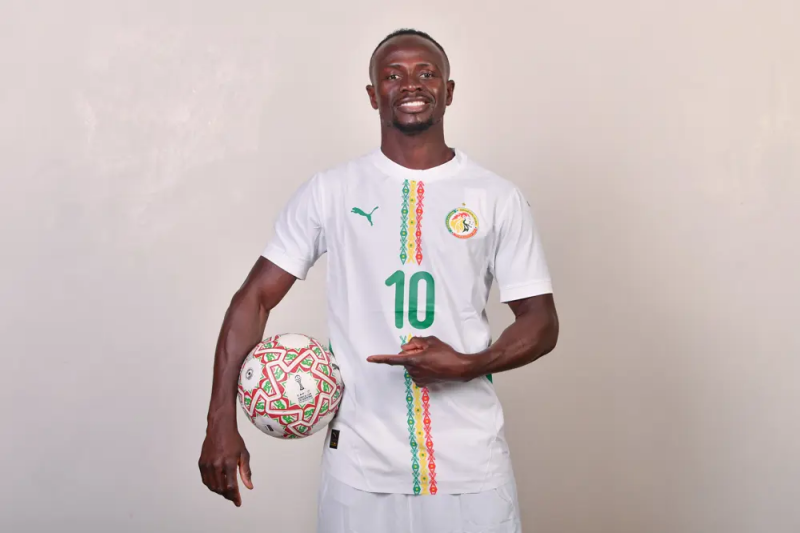
AFCON 2025 semi-final drama unfolded across two matches in Morocco, as Senegal defeated Egypt through a late goal in Tangier and hosts Morocco advanced past Nigeria on penalties after a goalless draw in Rabat. On a single day in Morocco, two matches unfolded that could scarcely have been more different in character, yet both delivered the kind of tension that makes this competition so compelling.
In Tangier’s Ibn Batouta Stadium, the first semi-final pitted Senegal against Egypt in what felt less like a football match and more like a continuation of a rivalry that has defined African football’s recent history. The two sides had met previously in high-stakes fixtures, including the 2022 AFCON final and World Cup qualifying matches. Their latest encounter again brought together Sadio Mané and Mohamed Salah, former Liverpool teammates now representing opposing national teams.
For 78 minutes, the match lived up to its billing as a cagey affair. Egypt’s defence, marshalled with the kind of disciplined organisation that had carried them past defending champions Ivory Coast in the quarter-finals, held firm against Senegal’s probing attacks. The Teranga Lions, who had sailed through the group stage unbeaten with seven points, controlled possession but found themselves frustrated by a well-drilled Egyptian backline and the occasional tactical foul, the kind that accumulates yellow cards but breaks up dangerous play before it can truly develop.
The deadlock seemed destined to persist deep into the match when Senegal worked the ball down the channel in the 78th minute. Ismaila Camara’s shot was charged down, the ball ricocheting into space some 20 yards from goal. There, Mané collected it with the kind of composure that only comes from years of delivering in high-pressure moments.
His right-footed strike was perfectly executed, a low laser that arrowed inside the left-hand post before Egypt’s goalkeeper could react. It was the sort of goal that defines careers and tournaments, a moment of individual brilliance breaking open a match that had refused to yield.
Mané’s strike was more than just a goal. It was a statement of intent from a player who has made a habit of rising to the occasion when his country needs him most. Against a goalkeeper who had no time to set himself and a defence that had done everything right until that moment, the finish showcased why match-winners earn that designation.
For Salah, watching from the other end, it marked yet another painful chapter in his personal duel with Senegal. Five meetings now, with just one win and one draw to show for it, and three defeats that included crucial knockout ties.
Egypt pushed desperately in the closing stages, their tactical discipline giving way to urgency. Yellow cards accumulated. Trezeguet and Hamdi Fathy were both cautioned as they tried to force their way back into the contest. Five minutes of added time felt like an eternity for both sets of supporters, but Senegal’s experience in these situations showed.
They had been here before, had won this tournament, and knew how to see out a narrow lead. When the final whistle blew, it confirmed not just Senegal’s place in the final but also the cruel reality of tournament football, that for all of Salah’s brilliance at club level, the AFCON title that has eluded him would have to wait at least another two years.
If the first semi-final was decided by a moment of quality, the second was defined by its absence of goals. In Rabat’s Prince Moulay Abdellah Stadium, hosts Morocco faced a Nigeria side that had been the tournament’s most prolific scorers, having netted 14 goals whilst topping Group C with a perfect record.
The Super Eagles arrived with confidence and expectation. Morocco carried the weight of a nation’s hopes and a 23-match unbeaten run that had become both strength and burden.
What unfolded was a tactical chess match that descended into a war of attrition. Morocco dominated possession from the outset, probing and testing a Nigerian defence that had suddenly discovered a newfound resilience. Brahim Díaz was a constant threat, his movement and technique creating half-chances that Nigeria’s backline, marshalled superbly by Calvin Bassey, managed to snuff out time and again.
When Ademola Lookman forced a save from Yassine Bounou in the 14th minute, it felt like a warning shot, a reminder that Nigeria possessed the quality to hurt Morocco on the counter.
But as the match wore on, it became clear that neither side would find the breakthrough in open play. Morocco’s best chance in the first half saw Ayoub El Kaabi fluff a scissor kick after Díaz’s header had created space, whilst Nigeria relied increasingly on the brilliance of Stanley Nwabali in goal.
His 52nd-minute save from Abdessamad Ezzalzouli’s effort, a shot that registered 0.76 expected goals on target, was the kind of intervention that changes matches and possibly tournaments. Nwabali threw himself to his right, getting a strong hand to a strike that seemed destined for the net.
The statistics told the story of a match that never quite caught fire. Fifty-one fouls disrupted any sense of rhythm, and by the time extra time arrived, both sides looked physically and emotionally drained.
It is also worth noting that the Morocco–Nigeria semi-final featured several contentious refereeing decisions that drew visible confusion on the pitch. One moment in particular saw a throw-in awarded to Morocco for a ball that appeared to still be in play, a call that even Moroccan players initially seemed uncertain about. While such decisions may not have determined the outcome of the match, they added to the sense of frustration and disruption in a contest already marked by frequent stoppages and limited attacking flow.
Victor Osimhen, Nigeria’s talismanic striker, had been rendered almost invisible by Morocco’s defensive attention, isolated and unable to impose himself as he had done earlier in the tournament. When he departed injured in the 118th minute, replaced by Paul Onuachu, it felt symbolic of Nigeria’s struggles, their most potent weapon nullified by Moroccan organisation and the sheer weight of expectation.
Extra time produced only one shot on target, a tame effort from Morocco’s Neil El Aynaoui that Nwabali saved comfortably. The match had descended into what commentators described as a midfield scuffle, neither side willing to commit too many bodies forward for fear of being caught on the break.
Penalty shootouts are cruel arbiters of fate, stripping away tactics and teamwork to leave only individual nerve and skill. Morocco’s El Aynaoui stepped up first and scored, setting the tone. Paul Onuachu responded for Nigeria.
Then came the misses. Hamza Igamane for Morocco was saved by the outstanding Nwabali. Samuel Chukwueze for Nigeria was denied by Bounou. Eliesse Ben Seghir and Fisayo Dele-Bashiru both converted to keep things level.
Achraf Hakimi, with characteristic confidence, scored cheekily for Morocco, only for Bruno Onyemaechi to see his effort saved by Bounou, who had found his rhythm when it mattered most.
Youssouf En-Nesyri stepped up for Morocco’s fourth penalty knowing that a goal would send the hosts through. His finish was emphatic and decisive, and it sparked scenes of wild celebration in Rabat.
Morocco had maintained their perfect competitive home record stretching back to 2009, extended their unbeaten run to 23 matches, and most importantly, booked their place in a final that would give them a chance at ending a 50-year wait for continental glory.
For Nigeria, the defeat was decisive. They progressed to the semi-finals after a strong group-stage campaign and held Morocco to a goalless draw through regulation time and extra time. The match was settled by penalties, where Nigeria were eliminated, bringing their tournament to an end at the semi-final stage.
The contrasting nature of the two semi-finals highlighted the tournament’s unpredictability. Senegal’s victory was built on a moment of quality, a flash of brilliance from a player who has delivered repeatedly on the biggest stages. Morocco’s triumph came through defensive organisation, home advantage, and the kind of mental fortitude required to prevail in a penalty shootout.
As Morocco and Senegal prepare to meet in the final, the narratives write themselves. The hosts, riding a wave of national fervour and an extraordinary unbeaten run, are seeking to end half a century of hurt. The defending champions are battle-hardened and experienced, led by players who know what it takes to win this tournament.
One team chasing history.
The other attempting to cement a dynasty.
The semi-finals delivered drama, heartbreak, and moments that will be replayed for years to come. Mané’s strike in Tangier will live long in Senegalese football folklore, just as Bounou’s penalty saves will be etched into Moroccan memory. Salah’s continued wait for AFCON glory and Osimhen’s frustrated tournament will serve as reminders of how difficult it is to translate individual brilliance into collective success at this level.
What the semi-finals proved, once again, is that the Africa Cup of Nations remains one of international football’s most compelling tournaments, combining technical quality with raw passion, tactical sophistication with moments of individual magic, and always delivering drama when it matters most.

