



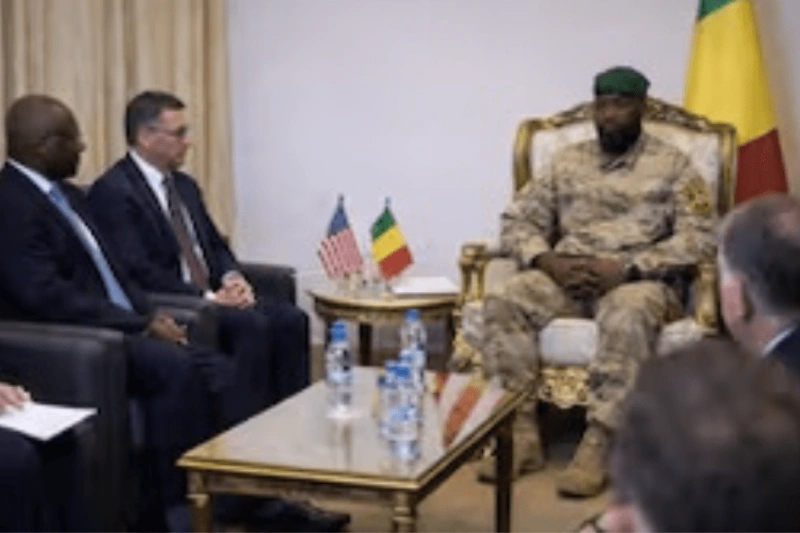

For three long years, the script for U.S. policy in the Sahel was entirely predictable. The strategy was to freeze the bank accounts, cut the development aid, and wait for the military juntas in Bamako to blink. It was a policy built on democratic ideals but disconnected from the shifting sands of West African security. However, the announcement of a U.S Mali Sanctions Reset 2026 confirms that the old playbook has finally been shelved.
This week, the U.S. Treasury Department officially scrubbed Mali’s Defence Minister, Sadio Camara, from its restricted list. Along with him, military heavyweights Alou Boi Diarra and Adama Bagayoko are no longer under the financial thumb of the United States. By the time the news hit the streets of Bamako, the scale of this U.S. Mali Sanctions Reset 2026 was clear: a coordinated, pragmatic pivot has turned years of cold-shouldering into a necessary, if awkward, embrace.
Breaking the Russian Monopoly
Let us be clear about one thing. This is not a sudden endorsement of the 2021 coup or a sign that the U.S. has fallen in love with military rule. Instead, it is a cold calculation about survival in a region where the West has been losing ground at an alarming rate. When these three men were first sanctioned back in 2023, the goal was to punish them for bringing in the Wagner Group, which has since been rebranded as the Russian Africa Corps. Washington hoped that financial pressure would force a breakup.
The opposite happened. The sanctions only pushed the Malian leadership deeper into the pocket of the Kremlin. While the U.S. watched from the sidelines, Russian influence grew from mere security guards to full-scale political and economic advisors. With French troops long gone and the U.S. recently evicted from its billion-dollar drone base in Agadez, Niger, Washington found itself effectively blind.
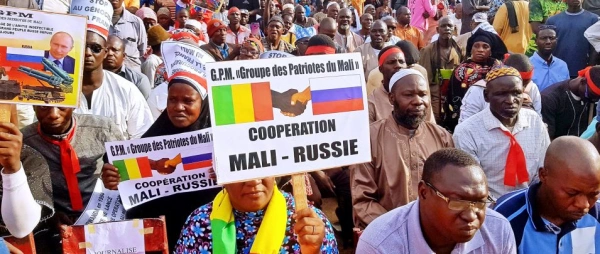
In a region crawling with Al-Qaeda and ISIS affiliates, being blind is a death sentence for foreign policy. With the U.S Mali Sanctions Reset 2026, Washington is paying the “admission fee” to get back into the room and restart intelligence sharing.
Minerals and the Reality of Sovereignty
There is more to this than just drones and counter-terrorism. A white-gold rush is happening right now in the Malian dirt. By 2027, Mali is projected to become one of the most significant lithium players on the planet. This mineral is the heartbeat of the global green energy transition, and right now, China and Russia are the ones securing the mines.
The U.S Mali Sanctions Reset 2026 reflects a late realisation. You cannot protect your strategic interests or your supply chains from the sidelines. Mali is now a founding member of the Alliance of Sahel States, a bloc that has proven it can survive Western isolation by leaning on Eastern powers. This week’s delisting shows that the U.S. is finally trading its democracy-first lectures for a more transactional style of realism.
Bottom Line for West Africa In View of U.S Mali Sanctions Reset 2026
No one should expect a parade in the capital just yet. The removal of these sanctions is a tool, not a truce. The U.S Mali Sanctions Reset 2026 lowers the barrier for dialogue and lets the money flow where it needs to for security cooperation. The U.S. needs Mali’s cooperation to stop the southward march of jihadist groups toward coastal states like Ghana and Ivory Coast.
For the rest of West Africa, the message is loud and clear. In the 2026 geopolitical landscape, raw materials and boots-on-the-ground intelligence speak much louder than diplomatic principles. Washington has decided that it is better to have a seat at the table with a junta than to have no seat at all while Moscow and Beijing feast.


