



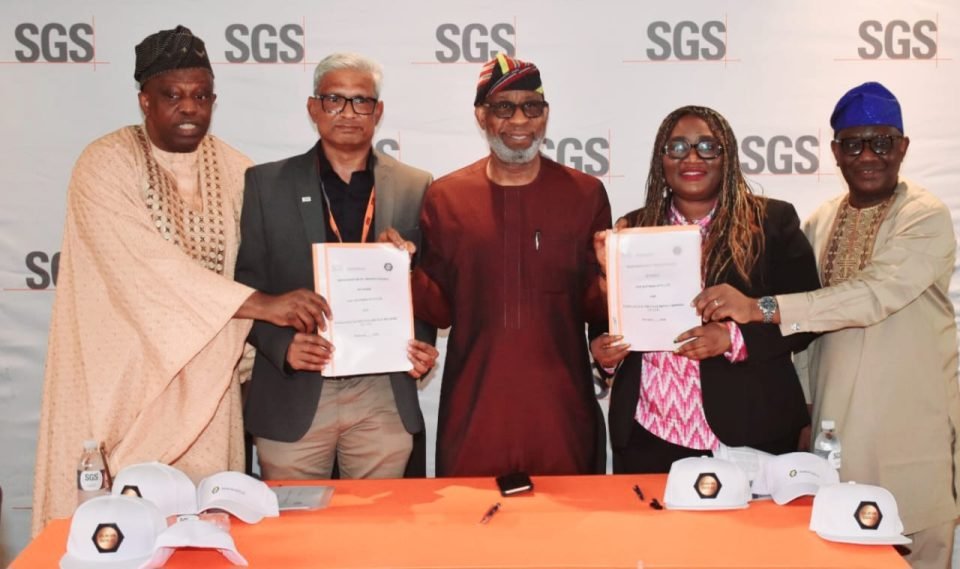
On Sunday, 1 March 2026, Nigeria signed what officials describe as the largest private-sector investment ever recorded in the country’s mining industry. The agreement between the Solid Minerals Development Fund (SMDF) and the Africa Finance Corporation (AFC) goes far beyond the construction of a single industrial plant. It is structured as a three-part intervention designed to move Nigeria from exporting raw minerals to building a domestic value-added industrial base.
For decades, Nigeria has largely operated a “pit-to-port” model in solid minerals, shipping unprocessed ore abroad and importing finished products at higher cost. The $1.3bn SMDF-AFC deal is intended to reverse that equation.
The Alumina Refinery: Technical and Economic Blueprint
At the centre of the agreement is a proposed world-class alumina refinery. This facility represents a critical link in the aluminium value chain.
Capacity and Technology
The plant is designed to process 1 million tonnes of bauxite annually, converting it into alumina, the essential precursor for aluminium production. The refinery will deploy the Bayer process, the global industry standard. This method uses caustic soda under heat and pressure to extract alumina from ore before calcination produces the final white powder used in aluminium smelting.
Energy Independence
One of the chronic bottlenecks in Nigerian manufacturing is unstable grid electricity. To avoid that constraint, the project includes an on-site gas-fired cogeneration plant. This facility will generate both steam and electricity dedicated to refinery operations, insulating the project from national grid volatility.
Operational Lifespan
Engineers have designed the facility for a 20-year operational horizon, targeting a 95 per cent utilisation rate. Over that period, projected cumulative output stands at approximately 19 million tonnes of alumina.
Projected Economic Returns
Nigeria’s Minister of Solid Minerals Development, Dele Alake, alongside SMDF Executive Secretary Fatima Shinkafi, has outlined ambitious economic projections tied to the project.
-
GDP Contribution: Officials estimate the refinery could contribute $1.2 billion annually to Nigeria’s Gross Domestic Product once fully operational.
-
Foreign Exchange Earnings: Over its lifecycle, the project is projected to generate roughly $8 billion in foreign exchange earnings. In a country where currency stability remains a recurring policy challenge, that inflow could provide meaningful support for the naira.
-
Total Economic Impact: Cumulative impact across direct operations, supply chains, logistics, and associated industries is estimated at over $25 billion during the plant’s lifespan.
Beyond the Refinery: Two Structural Pillars
While the refinery is the headline act of the $1.3bn SMDF-AFC deal, two less publicised components could prove equally transformative.
1. Nationwide Geoscience Mapping
Nigeria’s mining sector has long struggled with limited geological data. Under the agreement, funding will support a comprehensive nationwide geoscience mapping exercise. By generating verified mineral data, the initiative aims to reduce investor risk and make exploration decisions data-driven rather than speculative.
2. Strategic Investment Vehicle
The SMDF and AFC are also establishing a joint investment vehicle to manage exploration leases and accelerate identified assets into production. The goal is to avoid the bureaucratic delays that have historically stalled mining projects, creating a structured pipeline from discovery to production.
The Value-Addition Pivot
The deal aligns with Nigeria’s broader policy shift towards domestic processing. For decades, Nigeria exported raw bauxite at modest margins while importing aluminium products at significantly higher costs. By refining alumina locally, the country moves one step higher on the global value chain.
Industrialisation of the North
Much of Nigeria’s known bauxite deposits lie in the Middle Belt and northern regions. Officials argue the refinery could anchor a broader downstream industrial corridor, stimulating transport, fabrication, packaging, and construction supply chains in those areas.
Signalling to Institutional Capital
By partnering with the AFC, a multilateral development finance institution with a strong track record, Nigeria is signalling to global investors that its mining framework is becoming more structured and “bankable.”
Risks and Execution Challenges
While the agreement is signed, delivery will determine credibility. Three areas warrant close monitoring:
-
Security: Several mineral-rich zones in North-Central Nigeria face security pressures. Ensuring safe access to mining sites will be critical.
-
Infrastructure Synchronisation: The gas-fired cogeneration plant must be delivered in tandem with the refinery to avoid stranded assets.
-
Regulatory Bottlenecks: The pace of lower-tier approvals across multiple federal and state agencies will test the government’s reform narrative.
A Defining Moment for Nigeria’s Mining Sector
If executed effectively, the $1.3bn SMDF-AFC deal could mark a structural turning point in Nigeria’s solid minerals industry. Rather than exporting raw ore, the country would begin exporting refined industrial inputs.
The deal does not eliminate risk, but it introduces scale, structure, and institutional backing into a sector that has long struggled to attract serious capital. For Nigeria’s mining industry, the shift from ambition to implementation now begins.

